Remembering Aaron Swartz
Welcome to the November issue of Hacker Chronicles!
Aaron Swartz, Internet legend and a fighter for freedom of speech and information, would have turned forty years old today, November 8, 2026.
West William Wilder, the protagonist of my novels, is in part inspired by Aaron Swartz. Quite clearly in his fight for freedom in the age of the Internet. But West was also imprisoned for a long time for trying to do what's right in the digital domain and Aaron faced a long prison sentence at the time of his death.
In this newsletter issue I'll try to retell the story of Aaron from my perspective, with the help of the freely available documentary about him, The Internet's Own Boy. I will also talk about Aaron's impact on things we take for granted in technology today.
November is when we start the read-along of Neal Stephenson's Snow Crash. The December issue will review roughly the first hundred pages, which is chapter 1-12. Chapter 13 starts with "The Nipponese businessman …"
/John
Writing Update
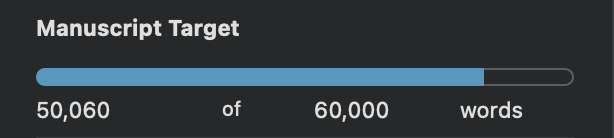
I'm past 50k words for my upcoming novel Yield! It seems quite possible to finish the first draft in time for the Christmas break, so I can start editing then.
I was recently in Dublin, Ireland, and both had a couple of nice writing sessions and visited two fantastic libraries. I'll share photos on that in a later issue.
November Feature: Remembering Aaron Swartz (1986-2013)
This newsletter issue will focus on what I view as Aaron Swartz's good deeds. He deserves it. But his political views and methods to achieve his goals are not hailed by everyone. The US government's view of him ultimately led to his demise.
Since I will write briefly about suicide and a tragic end to a young person's life, here are some resources in case you need help:
- 🇺🇸 Suicide & Crisis Lifeline
- 🇺🇸 Crisis Text Line Text HOME to 741741
- 🇸🇪 Hjälplinjen
Who Was Aaron Swartz?
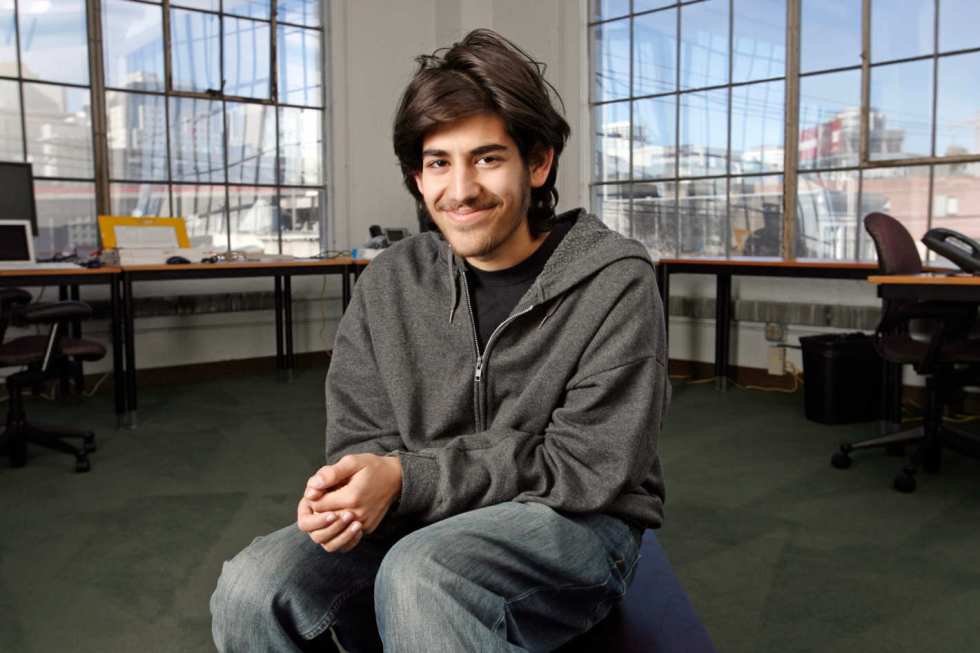
Photo of Aaron Swartz from aaronswartzday.org.
Aaron Swartz was an incredibly gifted and inspirational person who leveraged the power of technology and the Internet to drive change and expand freedom. He started reading at the age of three and was already a programming prodigy as a tween.
He had an immense ability to see the potential of the Internet. The global network could help build and spread knowledge, organize democratic movements, and connect people.
While he started out as an entrepreneur, most famously as co-founder of Reddit, he later became much more of a political figure.
The Political Setting Around the Time Aaron Died and I Started Writing Identified
My novel Identified mentions that Aaron's suicide, the Snowden leaks, and Chelsea Manning being sentenced to thirty-five years in prison all happened within less than a year. Actually between January and July 2013.
That's now almost fourteen years ago. Back then, WikiLeaks and revelations of massive online surveillance were global news.
It was also a time when hacker collectives Anonymous and LulzSec stoked fear with their hacking capabilities. I wrote about this in my May 2025 issue, special feature "Guy Fawkes and the Rise of Hacktivism."
The incredible TV show Mr. Robot premiered in June 2015 and is primarily about hacktivism. The writer, Sam Esmail, said he was also inspired by the Arab Spring in 2011 in which Internet communication played a key role. I remember feeling really hopeful back then regarding people's ability to break free from long-term oppression and dictatorship.
A Timeline of the Fight For Internet Freedom in the Early 2010s
I had to build a timeline to get this right. The Internet had become capable and widespread enough to play a key role in politics and personal freedom. The fights during this era were a mix of grassroots uprising against inequality, largely organized online, and a fight to not let governments shut down parts of the Internet.
2010 is a good starting point …
January 2010: Chelsea Manning Initiates Her Whistleblowing
Chelsea Manning, intelligence analyst in the US Army, downloads 400k classified documents on the Iraq War, and 91k documents on the Afghanistan War. She takes the material through security on a CD labeled "Lady Gaga."

Chelsea Manning, originally from her Xitter profile.
April 2010: WikiLeaks Shares the "Collateral Murder" Video
WikiLeaks publishes Manning's video of a US helicopter attack in Baghdad under the title "Collateral Murder," followed by the war logs, making her a whistleblower on American wrongdoings. There is public debate on whether websites such as WikiLeaks can be blocked and what the limits should be on sharing information online. Straight up censorship of websites is one thing, but there is political movement to be able to shut sites down on other grounds.
July 2010: Manning Is Charged
Manning is charged with leaking classified information. Later, the charges are expanded to include "aiding the enemy" which could carry a death sentence.
September 2010: US Congress Wants to Legalize Shutting Down Websites, and Swartz Gets Active
The US Senate is presented with COICA, Combating Online Infringement and Counterfeits Act, which would allow the US Attorney General to take down any website on the world-wide web based on copyright infringement accusations. Aaron Swartz founds Demand Progress to fight it.
This is the first of three attempts to make it legal in the US to censor the Internet in the views of Internet activists.
December 2010-January 2011: The Arab Spring Starts
The Arab Spring starts in Tunisia and then spreads to Jordan, Oman, Egypt, and Yemen. Social media and access to the Internet play a huge role in the people's ability to organize and spread information globally. The Egyptian government tries to stop it by shutting down Internet access altogether.

Tahrir Square, Egypt, during the Arab Spring.
January 2011: Swartz Is Arrested by MIT Police
Swartz is arrested by Massachusetts Institute of Technology (MIT) police after connecting a computer to the MIT network to download academic journal articles. The suspicion is that he intends to share the articles for free online under the justification that the public has funded the research and thus has the right to access it. In July, federal prosecutors charge him with wire fraud and violations of the Computer Fraud and Abuse Act from the 1980s, and he faces thirty-five years in prison.
May 2011: The US Senate Tries to Legalize Shutting Down Websites Again
A new bill is pushed – PROTECT IP Act, Preventing Real Online Threats to Economic Creativity and Theft of Intellectual Property Act, or PIPA. This is the second attempt to make it legal to shut down websites.
September-November 2011: Occupy Wall Street
Occupy Wall Street protesters demonstrate against economic inequality, capitalism, corporate greed, big finance, and the influence of money in US politics.

Beginning on September 17, 2011, Zuccotti Park, Financial District in NYC, is occupied by protesters.
The hacktivist network Anonymous are early participants in Occupy Wall Street and help spread the movement to other cities, including London.
October 2011: US Congress Tries a Third Time to Legalize Shutting Down Websites
The US House of Representatives proposes SOPA, Stop Online Piracy Act, which would allow courts to ban advertising and payment networks from doing business with infringing websites. This is the third attempt to make it legal to shut down websites.
October 2011: Fight for the Future is Founded to Fight SOPA and PIPA
Fight for the Future is founded to try to stop SOPA and PIPA, and similar bills in the future. Now the movement is broader than Demand Progress.
November 16, 2011: The American Censorship Day
On "American Censorship Day," Tumblr, Mozilla, Techdirt, and others display black banners over their website logos with the words "STOP CENSORSHIP" to protest SOPA.
December, 2011: Boycott of GoDaddy
- December 22: A boycott of the world's largest domain name registrar, GoDaddy, starts to get organized on Reddit. GoDaddy is a supporter of SOPA.
- December 23: GoDaddy withdraws its support for SOPA.
- December 26: An online effort starts to push GoDaddy down from the number one spot on Google Search.
January 18, 2012: Wikipedia Goes Dark In Protest of SOPA and PIPA
Wikipedia, Craigslist, Internet Archive, Reddit, WordPress, and many more websites go dark in protest of SOPA and PIPA. Google Search does not go dark but puts a black banner over its logo and links to a petition against the laws. Mojang's game Minecraft shows a splash text that says "SOPA means LOSER in Swedish!"

Wikipedia on the day of the protest.
January 2012: SOPA and PIPA Lose Legislative Support
Following the web blackout, support for SOPA and PIPA among politicians quickly diminishes and the bills never reach a floor vote. Ten years later, Tiffiniy Cheng wrote "The SOPA Blackout not only killed the bill in 2012, but shook Congress so profoundly that no significant copyright legislation has been introduced in the ten years since. Because the Blackout achieved so much progress against the political order in a matter of weeks, this moment in history rewrote what we collectively think is possible in the political realm; in particular among the political set, even though triumphs of this proportion remain elusive, and power is even more entrenched."
May 2012: Swartz on "How we stopped SOPA"
Aaron Swartz gives a keynote address at Freedom To Connect 2012 titled "How we stopped SOPA."
 Recording of Aaron's keynote (click to go to YouTube).
September 2012: Swartz Faces 50 Years in Prison
Federal prosecutors add nine more felony counts in the case against Swartz. He now faces fifty years in prison. In plea negotiations, prosecutors offer him a deal of six months in prison if he pleads guilty. Swartz rejects the deal. The case moves toward trial.
January 2013: Swartz Dies By Suicide
January 2013, Swartz dies by suicide. The world of people who care about the Internet is in shock. I am devastated, as are so many others.
June 2013: The Snowden Leaks
Edward Snowden discloses global surveillance via The Guardian.

Edward Snowden in 2013.
Legal Aftermath
- July 2013: Manning is sentenced to thirty-five years in prison, after being acquitted of aiding the enemy.
- July 2013, Snowden is granted a temporary asylum by the Russian government.
- January 2017, President Obama commutes Manning's sentence, resulting in her release in May 2017.
Aaron Swartz was a key figure in those times. And his death in January 2013 accentuated the stakes and the fight for an Internet that shouldn't be a tool for oppression and censorship.
Documentary: The Internet's Own Boy
Swartz helped Professor Lawrence Lessig launch Creative Commons, so it's only natural that the documentary is available for free, under Creative Commons, on the Internet Archive. Watch it here:

The documentary is from the year after Aaron died so the people interviewed still have it fresh in their minds. We hear extensively from Aaron's two brothers, his parents, his girlfriend up until the MIT arrest and his girlfriend up until his death. Big names in Internet culture like Professor Lessig, Cory Doctorow, and Matt Stoller are interviewed too.
For me, the documentary does three things.
First, it establishes Aaron as a very gifted and driven person from young childhood. That explains how he got so many extraordinary things done.
Second, it tells the story of someone who goes from building technological wonders to becoming a citizen focused on the future of society, leveraging technology to drive progress.
Finally, it lays bare the very questionable prosecution of Aaron by the US government. Questionable in proportionality – why would you face decades in prison for freely distributing academic research papers? Questionable in MIT's role, a place where ingenuity and hacker culture used to be celebrated. And questionable in what the ulterior motive was for the prosecution – why did the government go all-in on destroying Aaron Swartz?
Aaron's Contributions to Technology That's All the Rave Today
Markdown
If you're a web nerd like me, you've heard of markup and markup languages. HTML stands for Hypertext Markup Language, and it's the language with which you create webpages. The word hypertext is connected to hyperlinks which we now just call links, as in a link to a website. Documents hyperlinked together so that you can browse them are the origins of the World Wide Web, invented by Tim Berners-Lee.
World Wide Web is where www comes from in links, by the way. I mention that because the initials of my protagonist West William Wilder are not a coincidence. Did I say I was a web nerd?
Writing HTML manually is tedious and requires knowledge of how you include images, how you create bullet lists, and how you create links.
In 2004, John Gruber created a much simpler language that you can write in and that translates directly and precisely to HTML. He called it Markdown.
Markdown was to a large extent created as a tool for bloggers. It was still the early days of blogging.
Aaron Swartz was super into blogging and had been on a similar path two years earlier, creating his own text-to-HTML tool. He became Gruber's beta tester of Markdown. That might sound like a small part, but as Anil Dash put it, regarding the testing of Markdown:
… one of the greatest things about Aaron was that he could be a total pain in the ass, which made him terrific at reporting bugs in your software.
Writing webpages and blogging may sound archaic today. But Markdown has gone so much further. It is the standard for documenting software, I use it to write my newsletter issues, and it has become the lingua franca of generative AI. If you want to give a chatbot text in a compact format that it handles well or want your chatbot to create a document for you, Markdown is the answer.

The Internet's primary forum is Reddit. And since large language models need immense amounts of text to train on, Reddit has become the favorite website of AI training too. The corpus of knowledge on Reddit is so incredible that before the rise of modern chatbots, people would search and tell their search engine to only show results on Reddit, because they knew that's where all the quality answers were.
Aaron Swartz is a co-founder of Reddit. Steve Huffman and Alexis Ohanian created the original version of it in 2005 but they merged with Aaron's company Infogami the same year and the three became co-founders.
Possibly Aaron's biggest technical contribution to Reddit was rewriting it from Lisp to Python, using web.py, a framework he wrote himself.
Open Library
Aaron Swartz co-created Open Library, with the motto of "one web page for every book ever published." The others were Brewster Kahle, Alexis Rossi, Anand Chitipothu, and Rebecca Hargrave Malamud. Open Library is a project of the Internet Archive, which is a nonprofit organization.
As the original engineer building Open Library in 2006, Aaron got seriously into freedom of information.
The Start of Activism With Watchdog.net
In 2008, a 21-year-old Swartz founded Watchdog.net, "the good government site with teeth."
The purpose was to aggregate and visualize data about politicians. That year, he wrote the Guerilla Open Access Manifesto which years later was used against him in the federal crime case.
When you look at the culture wars of today, the public scrutiny of politicians, and the political misinformation, you can only conclude that Aaron was onto something.
RSS
RSS, sometimes spelled out as Rich Site Summary, is the Internet protocol for subscribing to a feed. The original use case was news aggregation. The user has an RSS reader where all the feeds they subscribe to came in. There are still such services, perhaps most famous these days is NetNewsWire.
Merely fourteen years old, Aaron Swartz became a member of the working group that authored the RSS 1.0 specification.
Today, RSS is most famous for having sparked podcasts. When you subscribe to a podcast, you technically add the podcast's RSS feed to your podcast app. Just like many other web technologies, RSS has stood the test of time.
Where Would Aaron Be Today?
I'm reluctant to think of where Aaron would be today. We lost him and we should focus on making sure something similar cannot happen again.
But I think Aaron was on a path to ever growing political influence. We see tech billionaires use both their money and their smarts to influence politics today, and many are dissatisfied with it. I don't think Aaron would have gotten entangled with big money even though he was big in tech. As far as I can tell, he was less cynical and less selfish than the tech leaders who meddle with politics today.
Who knows, Aaron might have run for president one day?
Aaron In My Novel Identified
Part of how Aaron Swartz influenced my writing was that my protagonist West Wilder is on the journey that Aaron didn't choose. West served 15 years in prison for actual hacking of the NSA. But he got out and he is out there, fighting for people against powerful nation state actors.
This is West in Identified, freshly out of prison, talking to his mom who is refusing to pay for surgery that might extend her life:
“I wouldn't paint our hack in righteous colors. Not anymore,” he said.
“Remember that young man you told me about all those years ago?” his mom said. “The young man who tried to give people access to research?”
“Aaron Swartz,” he said.
Of course he remembered. Aaron, Edward, and Chelsea were the reasons he and Melissa had embarked on their hack against the NSA. Aaron had committed suicide when faced with thirty-five years in prison for trying to release tax-funded research papers to the public. Then NSA contractor Edward Snowden had disclosed vast US surveillance on a global scale and had to flee to Russia to escape decades in prison, and intelligence analyst Chelsea Manning had been sentenced to thirty-five years in prison for leaking footage of US military wrongdoings in Iraq and Afghanistan through WikiLeaks. All within less than a year.
His mom gave him a serious look. “I read about Aaron, and I think they are trying to get to you just like they did with him. They hate that I got you out of prison. I could see it in their eyes when they came to me in the hospital. If they can't have you locked up, they want us to spend all our savings on some advanced surgery no one's ever heard of. I'm not going to give them that. I always knew there would be a price to pay to get my son back. If this is the price, I'll pay it, not you. That college fund is for your future, not for my worn-out body.”
Currently Reading
I gave up on Three Men in a Boat by Jerome K. Jerome, at least for the time being.
Now I'm instead reading The Groote Park Murder from 1923. It's really good so far.